India’s Leading Platform for Disability Rights Enforcement & Accessibility Compliance.
Ensuring dignity, accessibility, and legal protection under the RPwD Act 2016.
Our Impact Areas
RPwD Act 2016 Compliance Support
Clear guidance to help individuals and institutions comply with the RPwD Act and ensure legal protection.
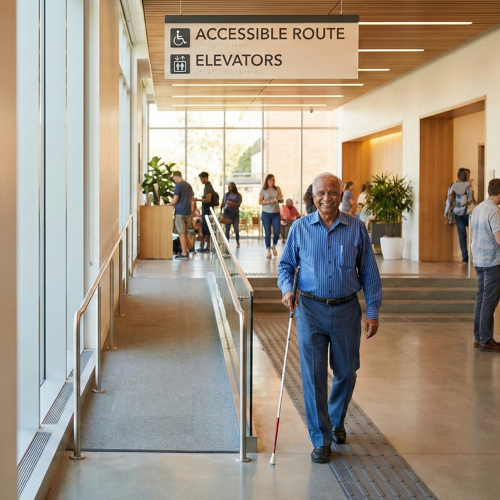
Accessibility Assistance
Support for reporting inaccessible buildings, transport, digital services, and ensuring corrective action.
RTI & Legal Complaint Assistance
Help in drafting RTIs, filing complaints, and escalating cases for faster disability-rights enforcement.
Case Law Library
Easy access to simplified Supreme Court and High Court judgments on disability rights.
Digital & Physical Accessibility Standards
Guidance on WCAG digital accessibility and national standards for buildings, transport, and public spaces.
Know Your Legal Rights
What does the Disability Act Guarantees You
Accessibility
Guaranteed under Sections 40–46: Barrier-free buildings, transport, ICT, and public infrastructure.
Relevant Sections from RPwD Act, 2016
Section 40: Accessibility Standards (Central Government to notify rules)
Section 41: Accessible Transport
Section 42: Accessible Information & Communication Technology (ICT)
Section 43: Urban & Rural Accessibility Schemes
Section 44: Accessibility in Consumer Goods
Section 45: Mandatory Accessibility in Public Buildings
Section 46: Time-bound retrofitting of existing infrastructure
Equality
Guaranteed under Section 3: Equal rights, dignity, and non-discriminatory treatment.
Relevant Sections
Section 3(1): Equality and Non-discrimination
Section 3(3): No denial of rights or access based on disability
Section 3(5): Protection of dignity and integrity
Section 4: Equality for women and children with disabilities
Protection
Guaranteed under Sections 6–8: Protection from abuse, exploitation, violence, and unsafe conditions.
Relevant Sections
Section 6: Protection from cruelty
Section 7(1): Protection from abuse, violence, and exploitation
Section 7(2): Mandatory reporting of abuse
Section 8: Safety and security in risky situations
Non-Discrimination
Guaranteed under Sections 6–8: Protection from abuse, exploitation, violence, and unsafe conditions.
Relevant Sections
Section 3(2): No discrimination in provision of services
Section 5: Right to community life without segregation
Section 20(1): Non-discrimination in employment
Section 21: Non-discrimination in education
Section 22: Right to accessible information
Education
Guaranteed under Sections 16–18 & 31: Inclusive education, exam support, and 5% reservation.
Relevant Sections
Section 16: Duty of schools to provide inclusive education
Section 17(i): Reasonable accommodation & support services
Section 17(ii): Scribes, readers, and exam accommodations
Section 18: Adult education & skill development
Section 31(1): 5% reservation for persons with benchmark disabilities in higher educational institutions
Section 31(2): Inclusive admission processes
Protection
Guaranteed under Sections 19–21 & 33–34: Equal employment rights, workplace accommodation, and 4% reservation.
Relevant Sections
Section 19: Social security, livelihood, and rehabilitation
Section 20(1): Non-discrimination in Government & private employment
Section 20(2): Reasonable accommodation in the workplace
Section 20(3): Promotion cannot be denied due to disability
Section 21: Non-discrimination in recruitment
Section 33: 4% reservation for persons with benchmark disabilities
Section 34: Identification of posts & reservation process
Accessibility
Guaranteed under Sections 40–46: Barrier-free buildings, transport, ICT, and public infrastructure.
Relevant Sections from RPwD Act, 2016
Section 40: Accessibility Standards (Central Government to notify rules)
Section 41: Accessible Transport
Section 42: Accessible Information & Communication Technology (ICT)
Section 43: Urban & Rural Accessibility Schemes
Section 44: Accessibility in Consumer Goods
Section 45: Mandatory Accessibility in Public Buildings
Section 46: Time-bound retrofitting of existing infrastructure
Equality
Guaranteed under Section 3: Equal rights, dignity, and non-discriminatory treatment.
Relevant Sections
Section 3(1): Equality and Non-discrimination
Section 3(3): No denial of rights or access based on disability
Section 3(5): Protection of dignity and integrity
Section 4: Equality for women and children with disabilities
Protection
Guaranteed under Sections 6–8: Protection from abuse, exploitation, violence, and unsafe conditions.
Relevant Sections
Section 6: Protection from cruelty
Section 7(1): Protection from abuse, violence, and exploitation
Section 7(2): Mandatory reporting of abuse
Section 8: Safety and security in risky situations
Non-Discrimination
Guaranteed under Sections 6–8: Protection from abuse, exploitation, violence, and unsafe conditions.
Relevant Sections
Section 3(2): No discrimination in provision of services
Section 5: Right to community life without segregation
Section 20(1): Non-discrimination in employment
Section 21: Non-discrimination in education
Section 22: Right to accessible information
Education
Guaranteed under Sections 16–18 & 31: Inclusive education, exam support, and 5% reservation.
Relevant Sections
Section 16: Duty of schools to provide inclusive education
Section 17(i): Reasonable accommodation & support services
Section 17(ii): Scribes, readers, and exam accommodations
Section 18: Adult education & skill development
Section 31(1): 5% reservation for persons with benchmark disabilities in higher educational institutions
Section 31(2): Inclusive admission processes
Protection
Guaranteed under Sections 19–21 & 33–34: Equal employment rights, workplace accommodation, and 4% reservation.
Relevant Sections
Section 19: Social security, livelihood, and rehabilitation
Section 20(1): Non-discrimination in Government & private employment
Section 20(2): Reasonable accommodation in the workplace
Section 20(3): Promotion cannot be denied due to disability
Section 21: Non-discrimination in recruitment
Section 33: 4% reservation for persons with benchmark disabilities
Section 34: Identification of posts & reservation process
Vision
To build an India where every person with disability lives with full dignity, unrestricted accessibility, and equal opportunity—supported by a society, government, and infrastructure that truly uphold the spirit of the Rights of Persons with Disabilities Act, 2016.
Our Mission
To Empower persons with disabilities with accessible education, templates, and clear rights-based guidance.
To Ensure enforcement of the RPwD Act 2016 through accessibility audits, compliance support, and legal accountability.
To Support individuals and communities in filing complaints, RTIs, and petitions against inaccessibility and discrimination.
To Work with government bodies and institutions to build barrier-free infrastructure, digital accessibility, and inclusive policies.
To Build a national movement for disability justice through advocacy, awareness, research, and stakeholder training.
To Serve as a centre of excellence for disability rights, case law analysis, and policy development.
When Awareness Reaches the Headlines
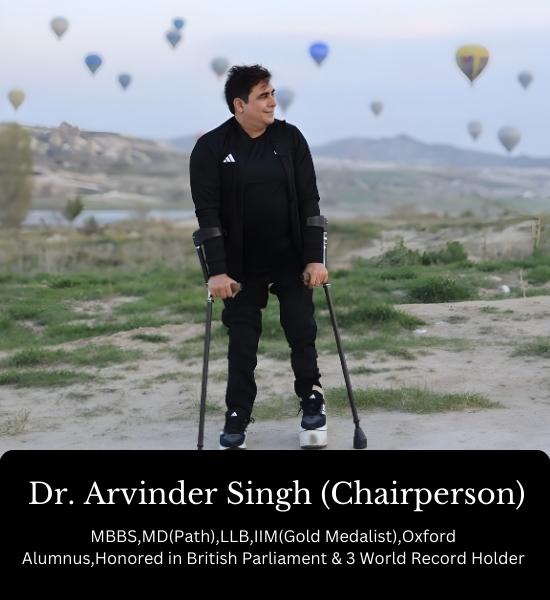
News platforms have showcased important discussions around disability and inclusion, helping educate the public and influence change. Featuring Dr. Arvinder Singh, these stories extend the message beyond advocacy circles.
How to Take Action
FILE A COMPLAINT IN 3 STEPS
Identify the Violation
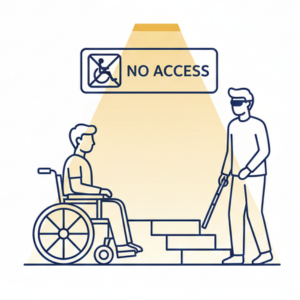
The first step is recognizing when your rights under the RPwD Act 2016 have been denied. This may include:
Lack of wheelchair access, ramps or lifts
Denial of entry or service due to disability
Inaccessible websites, apps, digital documents
Document the Evidence
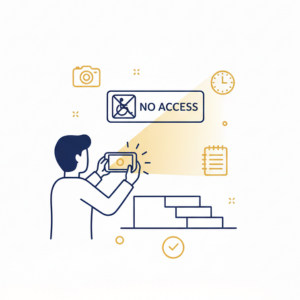
Accurate documentation strengthens your case and ensures proper legal action. Collect:
Photos or videos showing the accessibility barrier
Written description of what happened, including date & time
Names of officials, staff, or persons responsible
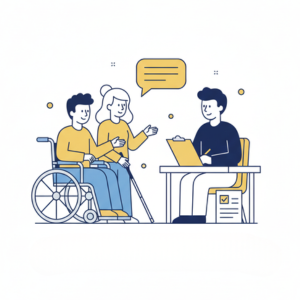
Submit & Follow-Up
Once evidence is ready, we assist you in submitting a formal complaint to the correct authority:
District Social Welfare Officer
State Commissioner for Persons with Disabilities
Educational institution / workplace authority
Identify the Violation
The first step is recognizing when your rights under the RPwD Act 2016 have been denied. This may include:
Lack of wheelchair access, ramps or lifts
Denial of entry or service due to disability
Inaccessible websites, apps, digital documents
Document the Evidence
Accurate documentation strengthens your case and ensures proper legal action. Collect:
Photos or videos showing the accessibility barrier
Written description of what happened, including date & time
Names of officials, staff, or persons responsible
Submit & Follow-Up
Once evidence is ready, we assist you in submitting a formal complaint to the correct authority:
District Social Welfare Officer
State Commissioner for Persons with Disabilities
Educational institution / workplace authority
Your complaint doesn’t end with submission — we help you track responses until resolution.
Supporting Organizations
Supporting Organizations
WhiteLight Energies Private Limited
Liberty Marketing
Tiffins
Shiva Impex Company
Our Ongoing Actions
Latest Cases & Enforcement Efforts
Panacea Disability Rights Activists continuously engages with citizens, institutions, and authorities to highlight accessibility gaps and promote compliance with the RPwD Act 2016.
Physical Accessibility
•Barriers in public buildings, hospitals, schools, and transport
•Workplace accessibility issues
Systemic Issues
•Lack of reasonable accommodation in institutions
•Policy-level accessibility gaps
Digital & Service Barriers
•Non-compliance with digital accessibility standards
•Discriminatory treatment or denial of services
Initial Assessment
Our team conducts an initial assessment of the reported violation to understand its scope and impact.
Guidance & Documentation
We provide guidance on proper documentation and evidence collection to strengthen your case.
Complaint Filing Support
Direction on filing complaints with the appropriate authorities in accordance with legal procedures.
Follow-up & RTI Support
Assistance with Right to Information requests and systematic follow-up on filed complaints.
Spot Checks & Reviews
Regular spot checks and basic accessibility reviews of public spaces and facilities.
Observational Surveys
Systematic observational surveys of public spaces to identify recurring accessibility challenges.
Digital Accessibility
Digital accessibility observations and evaluations of websites and online services.
Institutional Engagement
Direct engagement with institutions to promote awareness and improve compliance.
JOIN THE MOVEMENT – VOLUNTEER WITH US
Be a part of India’s accessibility revolution. As a volunteer with Panacea Disability Rights Activists, you help document barriers, support rights awareness, assist in basic accessibility reviews, and strengthen our nationwide advocacy under the RPwD Act 2016. Anyone committed to disability justice — students, professionals, activists, or citizens — can contribute.
Join us and help make accessibility a reality for everyone.
The Rights of Persons with Disabilities (RPwD) Act 2016 is an Indian law that guarantees equality, dignity, non-discrimination, accessibility, education, employment, and protection for persons with disabilities. It makes accessibility a legal right and mandates compliance by all public and private institutions.
We help individuals understand their rights, identify accessibility violations, document evidence, file complaints, and escalate cases to authorities. We also conduct awareness initiatives, basic accessibility observations, and promote nationwide compliance under the RPwD Act 2016.
Any person with disability, family member, caregiver, volunteer, student, or concerned citizen can file a complaint about accessibility violations or discrimination under the RPwD Act.
Any person with disability, family member, caregiver, volunteer, student, or concerned citizen can file a complaint about accessibility violations or discrimination under the RPwD Act.
Yes. Anyone who believes in disability justice can volunteer. We need people for documentation, awareness, accessibility observations, community outreach, and support tasks. No legal expertise is required.
Stand Up for Your Rights. We Stand With You.
Disability should never be a reason for discrimination, neglect, or injustice. If you or someone you care about is facing unfair treatment, your voice deserves to be heard. Together, we can work toward accountability, equality, and real change.