
Rights of Persons with Disabilities
- HOME
- Rights of Persons with Disabilities
Understanding the Rights of Persons with Disabilities in India
The rights of persons with disabilities India are rooted in a shift from charity-based thinking to a rights-based legal framework. For decades, disability was treated largely as a welfare issue, where support depended on goodwill rather than entitlement. This approach changed significantly with the introduction of the Rights of Persons with Disabilities Act, 2016, which recognizes persons with disabilities as equal citizens with enforceable rights.
This legislation aligns India with global disability rights standards and emphasizes dignity, autonomy, and full participation in society. Instead of viewing disability as an individual limitation, the law recognizes social, physical, and systemic barriers as the real obstacles. The focus is therefore on removing these barriers rather than “fixing” individuals.
For individuals and families, understanding these rights is critical. Legal awareness enables people to demand accessibility, fair treatment, and equal opportunities in education, employment, healthcare, and public life. For institutions, awareness is equally essential to ensure compliance, accountability, and inclusive practices.
At its core, the Act establishes that disability rights are human rights, not discretionary benefits—setting a foundation for long-term social inclusion and justice.
What Is the RPWD Act, 2016?
The Rights of Persons with Disabilities Act, 2016, is India’s principal disability law India, enacted to protect, promote, and fulfill the rights of persons with disabilities. It replaced earlier legislation to reflect evolving international standards and a deeper understanding of disability as a social and legal issue.
The Act is based on the principle that persons with disabilities must enjoy the same legal protections, freedoms, and opportunities as all other citizens. It provides statutory backing to equality, non-discrimination, and accessibility, making these obligations legally enforceable rather than optional.
One of the most significant aspects of the law is its expansion of recognized disabilities. By legally identifying 21 categories, the Act ensures inclusion of conditions that were previously ignored or inadequately addressed. This recognition allows individuals to access reservations, social security, healthcare benefits, and legal remedies.
The law also outlines RPwD Act guidelines that institutions must follow to ensure accessibility, inclusion, and reasonable accommodation. These guidelines serve as operational standards for implementation across sectors such as education, employment, transport, and digital services.
Most importantly, the Act establishes accountability mechanisms. Rights violations are no longer merely ethical failures—they are legal infringements with consequences. This shift strengthens the legal position of persons with disabilities and reinforces institutional responsibility.
Objectives and Legal Scope of the RPWD Act
The Rights of Persons with Disabilities Act, 2016 is designed to establish a rights-based legal framework that ensures equality, inclusion, and accountability for persons with disabilities. Its objectives focus on protecting fundamental rights while clearly defining the responsibilities of institutions and authorities.

Equality and Non-Discrimination
The Act guarantees equal protection of the law and prohibits discrimination on the basis of disability in all areas of life, including education, employment, healthcare, and access to public services. Discrimination is understood broadly to include denial of access and failure to provide reasonable accommodation. The emphasis is on substantive equality, requiring institutions to remove barriers rather than treat everyone identically.

Legal
Enforceability
A key objective of the RPWD Act is to convert disability rights into legally enforceable claims. Rights under the Act are not optional or advisory—persons with disabilities can seek legal remedies if their rights are violated. This enforceability strengthens legal protection and empowers individuals to challenge exclusion, discrimination, or neglect through designated authorities and legal forums.

Accountability
Mechanisms
The Act clearly defines the duties of government bodies, private institutions, employers, and service providers. It establishes oversight through Central and State Commissioners for Persons with Disabilities and includes penalty provisions for non-compliance. These mechanisms ensure that violations carry consequences and that inclusion is treated as a legal obligation rather than a voluntary initiative.

RPWD Act 2016 21 Disabilities Explained
The recognition of RPWD Act 2016 21 disabilities marks a major advancement in inclusive legislation. Instead of a narrow medical definition, the Act adopts a functional and social understanding of disability, covering a broad range of physical, intellectual, and neurological conditions.
These disabilities are not treated as labels but as legal categories that determine eligibility for rights, protections, and accommodations. The purpose is inclusion—not classification for exclusion.
Categories of Disabilities Recognized Under the Act
Physical Disabilities
Intellectual Disabilities
Neurological Conditions
Multiple and Rare Disabilities

Physical Disabilities

Intellectual Disabilities

Neurological Conditions
Multiple and Rare Disabilities

By recognizing RPWD Act 2016 21 disabilities across diverse domains, the law creates a foundation for tailored rights, services, and reasonable accommodation—moving beyond one-size-fits-all solutions.
Rights of Persons with Disabilities India in Daily Life
The rights of persons with disabilities India are not abstract legal concepts—they directly shape everyday experiences, opportunities, and independence. The RPWD Act ensures that persons with disabilities can participate fully in social, educational, economic, and civic life with dignity and equal opportunity.
Education
The Act guarantees the right to inclusive education at all levels. Educational institutions are prohibited from denying admission based on disability and are required to provide reasonable accommodation, such as modified curricula, assistive technologies, accessible infrastructure, and appropriate assessment methods. The focus is on learning outcomes and equal participation rather than exclusion or segregation.
Employment
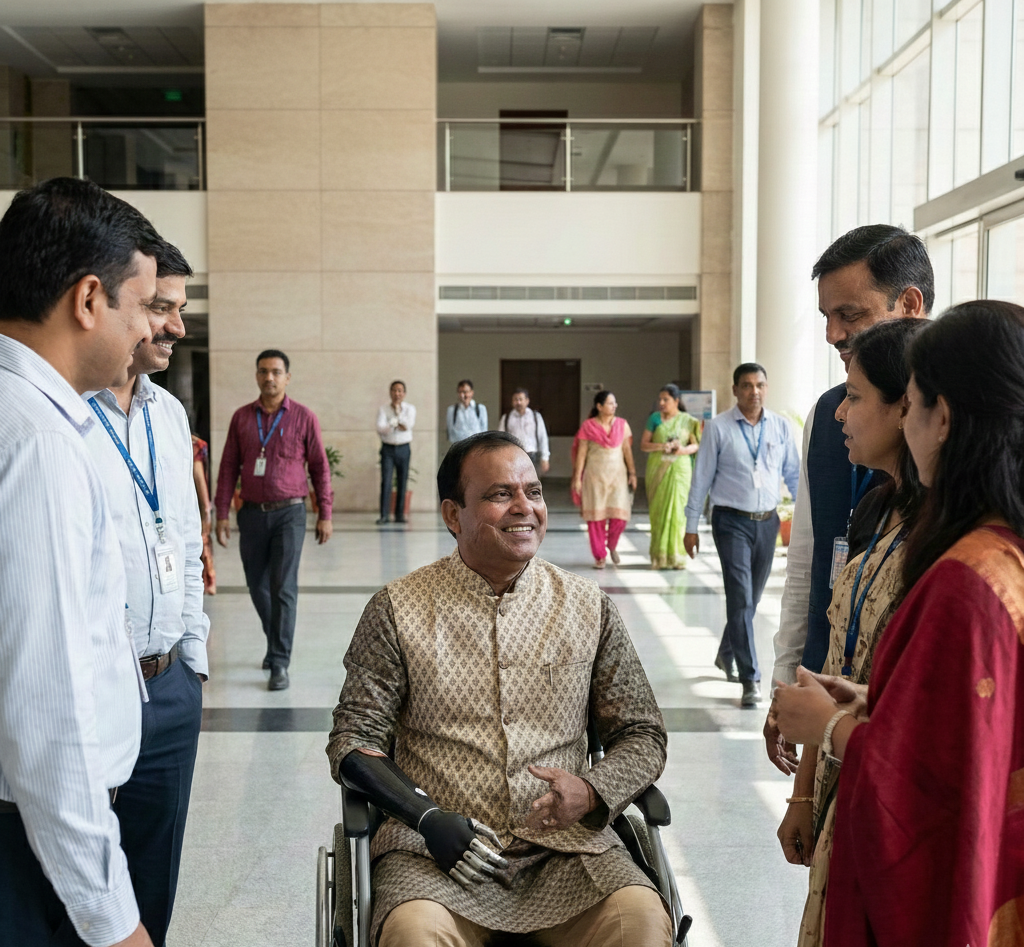
Persons with disabilities have the right to equal opportunity in employment. The Act provides for reservation in government jobs and mandates non-discrimination in recruitment, promotion, and working conditions. Employers are required to ensure workplace accessibility and make reasonable adjustments to enable employees with disabilities to perform their roles effectively and safely.
Healthcare
The RPWD Act affirms the right to accessible, affordable, and non-discriminatory healthcare. Medical facilities must ensure physical accessibility, clear communication, and informed consent. Persons with disabilities are entitled to respectful treatment, access to rehabilitation services, and health programs without bias or denial of care.
Social Security
To support independent living, the Act recognizes access to social security measures such as pensions, disability benefits, rehabilitation services, and community-based support. These provisions help reduce economic vulnerability and ensure long-term security for individuals and families.
Legal Capacity and Access to Justice
The law recognizes the legal capacity of persons with disabilities to make decisions about their lives. They have the right to own property, manage finances, and access courts and legal remedies on an equal basis with others. Support systems must respect autonomy and personal choice rather than replace decision-making.
RPWD Act Compliance for Institutions and Employers
Compliance is a legal obligation, not a voluntary initiative. RPwD Act compliance requires institutions to proactively remove barriers and ensure equal access for persons with disabilities.
Failure to comply can result in legal action, penalties, and reputational consequences. Institutions must therefore embed inclusion into policies, infrastructure, and operational practices.
Who Is Legally Required to Comply?
- Government departments and public authorities
- Private companies and employers
- Educational institutions (schools, colleges, universities)
- Service providers, hospitals, housing societies, and digital platforms
Ensuring RPwD Act compliance is essential for lawful and ethical operations.
Accessibility Areas Covered Under the Act
Accessibility is a fundamental right under the RPwD Act, not a discretionary facility. The law requires environments, services, and information to be designed in a manner that allows persons with disabilities to live independently and participate equally in society.
Built Environment
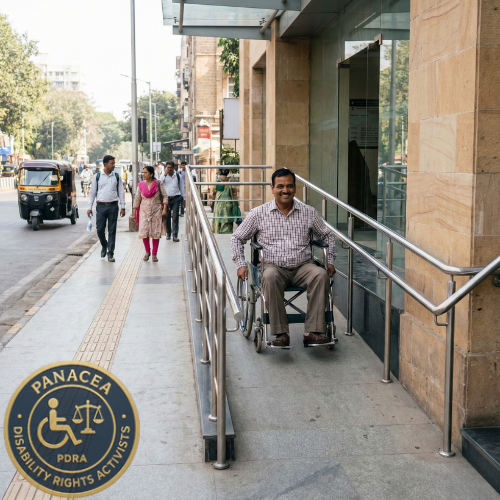
The Act mandates barrier-free access in public buildings, workplaces, educational institutions, hospitals, and housing complexes. This includes ramps with proper gradients, lifts with audio and visual indicators, tactile signage, handrails, and accessible toilets. These measures ensure safe and independent mobility for persons with physical, visual, and multiple disabilities.
Transport
Accessible transport is essential for education, employment, and social participation. The Act requires public transport systems to incorporate accessibility features such as low-floor buses, reserved seating, audio-visual announcements, accessible railway infrastructure, and supportive last-mile connectivity. Transport authorities must progressively remove physical and systemic barriers.
Digital Platforms
With increasing reliance on digital services, the Act extends accessibility obligations to websites, mobile applications, and online platforms. Public and private digital services must follow accessibility standards to support screen readers, alternative text, keyboard navigation, and inclusive design—ensuring equal access to information and services.
Public Services and Information
Government offices and service providers must make information available in accessible formats such as Braille, large print, audio, and sign language interpretation where required. Communication must be inclusive, timely, and understandable, enabling persons with disabilities to access services independently.
Meeting RPwD Act accessibility requirements promotes dignity, independence, and equal participation, ensuring that disability does not become a barrier to everyday life.
RPwD Act Guidelines and Implementation Framework
The law provides RPwD Act guidelines to translate rights into action. These guidelines define standards, timelines, and responsibilities for implementation.
Role of Authorities and Grievance Mechanisms

Central and State Commissioners for Persons with Disabilities

Structured complaint handling mechanisms
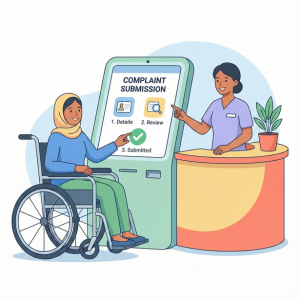
Monitoring and compliance
audits

The guidelines ensure that rights are not merely theoretical but practically enforceable.
RPwD Act Penalty Provisions and Legal Consequences
Accountability is a cornerstone of the Act. RPwD Act penalty provisions create deterrence against discrimination and neglect.

Financial Penalties for Violations
The Act provides for monetary penalties against individuals, institutions, or authorities that discriminate against persons with disabilities or fail to meet statutory obligations. These penalties serve as a deterrent and emphasize that denial of rights, accessibility failures, or neglect of reasonable accommodation is unacceptable under law.

Enhanced Penalties for Repeated Offences
Where violations are repeated or continue despite notice, the Act allows for increased penalties. Escalating consequences reflect the intent to prevent habitual non-compliance and compel corrective action. Persistent disregard of disability rights can therefore result in significantly higher legal and financial exposure.

Legal Enforcement Through Designated Authorities
Enforcement under the RPwD Act is carried out through designated authorities such as the Central and State Commissioners for Persons with Disabilities. These bodies have the power to investigate complaints, call for records, issue directions, and recommend legal action where necessary. Courts may also intervene to enforce compliance and protect rights.
Disability Law India – Awareness, Enforcement, and Impact
A strong disability law India framework is effective only when it is understood, invoked, and implemented in practice. Legal provisions alone cannot create inclusion unless individuals are aware of their rights and institutions recognize their obligations under the law.
Awareness plays a critical role in translating legislation into lived reality. When persons with disabilities, families, educators, employers, and service providers understand the RPwD Act, barriers are more likely to be identified and addressed proactively. Legal literacy helps individuals recognize discrimination, demand reasonable accommodation, and seek remedies without fear or confusion.
Enforcement is the bridge between awareness and impact. Active use of grievance mechanisms, oversight by designated authorities, and judicial intervention where necessary ensure that violations are corrected and compliance is strengthened. Consistent enforcement sends a clear message that disability rights are legal entitlements, not discretionary benefits.
The long-term impact of effective enforcement is systemic change. Institutions begin to integrate accessibility, inclusion, and non-discrimination into everyday operations. Over time, this leads to cultural shifts where inclusion becomes standard practice rather than an exception.
Legal awareness and enforcement together create a cycle of accountability, empowerment, and social inclusion—strengthening the foundations of disability law in India.
Frequently Asked Questions
The RPwD Act applies to any individual who has a disability recognized under the law and meets the prescribed criteria for certification. Protection extends across age groups and applies in education, employment, healthcare, public services, and access to justice. Both permanent and benchmark disabilities are covered, ensuring broad legal protection.
The Act formally recognizes the RPwD Act 2016 21 disabilities, covering physical, intellectual, neurological, and multiple disabilities. This expanded recognition ensures inclusion of conditions that were earlier excluded, allowing individuals to access legal rights, reservations, benefits, and reasonable accommodation.
Persons with disabilities can enforce rights related to inclusive education, non-discriminatory employment, accessible infrastructure and services, equal healthcare, social security benefits, and legal capacity. These rights are legally binding and apply to both government authorities and private institutions.
If rights under the RPwD Act are violated, individuals or caregivers can file complaints with designated authorities such as the Central or State Commissioner for Persons with Disabilities. Legal remedies, directives for corrective action, and penalties for non-compliance are available under the Act to ensure accountability.
Key Features & Provisions
Social Welfare & Justice
Disability pension, caregiver allowance, healthcare support, aids/appliances, and rehabilitation services. Protection from abuse, violence, and exploitation with equal access to justice.