

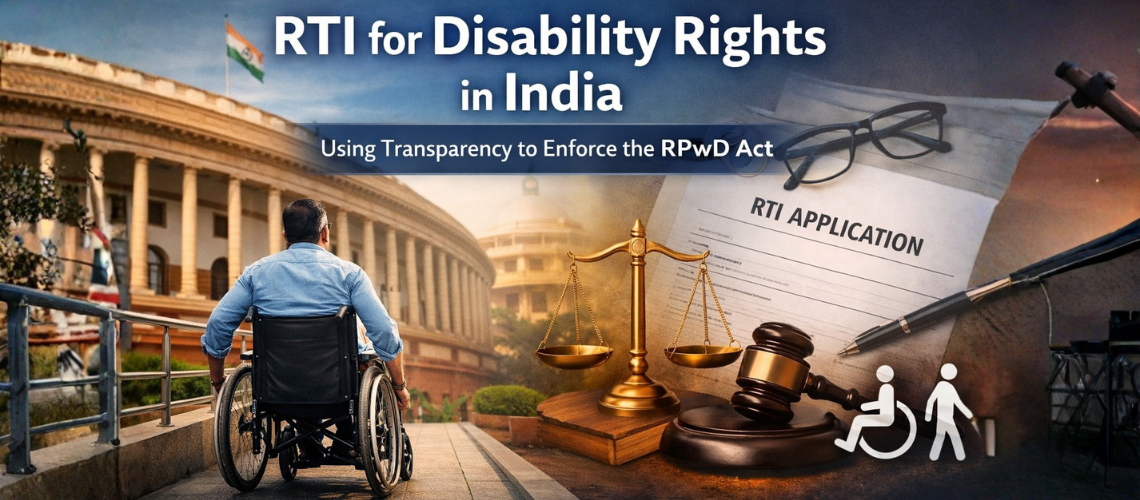
Access to information is a fundamental right in India, and for persons with disabilities, it can be a powerful tool for accountability and inclusion. When accessibility standards are ignored or benefits are denied, transparency becomes essential. This is where RTI for disability rights in India plays a transformative role.
The Right to Information Act, 2005, empowers citizens to obtain official records, decisions, and compliance reports from public authorities. When used strategically, RTI helps identify violations, push authorities toward compliance, and strengthen disability rights enforcement.
Understanding RTI for Disability Rights in India
The Right to Information (RTI) Act allows citizens to request information from government departments, public sector bodies, and institutions funded by public money.
Using RTI for disability rights in India enables individuals and advocates to obtain proof that accessibility norms and disability rights obligations are being met.
Why RTI Is a Powerful Enforcement Tool
- Promotes transparency and accountability
- Reveals compliance gaps in accessibility standards
- Provides documentary evidence for complaints or legal action
- Helps track the implementation of disability schemes
RTI vs Grievance: Understanding the Difference
- RTI: Requests information or records
- Grievance: Requests action or redressal
Legal Complaint: Seeks formal adjudication
RTI often becomes the first step before filing a complaint or legal action.
🔗 Learn more about disability rights: Rights of Persons with Disabilities
Why RTI Is Critical for Persons with Disabilities
The RTI Act for persons with disabilities ensures equal access to information that affects accessibility, inclusion, and social participation.
Information Access as a Legal Right
Public authorities are obligated to maintain transparency regarding policies, accessibility measures, and service delivery.
Transparency Obligations of Authorities
Government bodies must provide information on:
- Accessibility infrastructure
- Implementation of disability welfare schemes
- Reservation policies and compliance
Accessibility audits and inspections
How RTI Exposes Non-Compliance
RTI responses can reveal:
- Failure to implement accessibility standards
- Budget allocations not utilized
- Delays in providing assistive services
- Lack of reasonable accommodations
This transparency strengthens accountability under the RPwD Act.
How RTI Helps Enforce the RPwD Act
Using RTI to Identify Violations
RTI can uncover:
- Accessibility audit reports
- Policy implementation records
- Budget utilization data
- Compliance timelines
Common Violations Revealed Through RTI
- Delayed accessibility upgrades
- Denial of disability benefits
- Lack of inclusive infrastructure
- Absence of mandated accommodations
This process strengthens disability rights enforcement through RTI by providing verifiable evidence.
Common Disability Rights Issues Where RTI Is Effective
An RTI application for disability issues can be particularly useful in cases involving:
✔ Inaccessible government offices or public facilities
✔ Denial of disability reservation benefits
✔ Absences of ramps, lifts, tactile signage, or accessible toilets
✔ Lack of exam accommodations for students with disabilities
✔ Failure to provide assistive technologies or support services
How RTI Helps Enforce the RPwD Act
Filing an RTI application is simple and does not require legal expertise.
Who Can File an RTI?
- Persons with disabilities
- Parents or guardians
- Advocates and NGOs
- Any concerned citizen
Where to File
Online: Through the RTI portal of the concerned department or state portal
Offline: Submit application to the Public Information Officer (PIO)
Basic Format Requirements
- Applicant name and contact details
- Clear description of the information requested
- Time period for requested information
- Application fee (waived in certain cases)
Time Limits for Response
- 30 days (standard cases)
- 48 hours (life and liberty matters)
🔗 Learn the complaint process: How to File a Disability Complaint in India
What Information Should Be Asked Under RTI
Under the RTI Act for persons with disabilities, you may request:
✔ Accessibility compliance reports
✔ Budget allocation and utilization for disability schemes
✔ Inspection or audit reports
✔ Action taken reports on accessibility complaints
✔ Reservation compliance data
✔ Details of assistive facilities provided
Precise questions improve the quality of responses received.
Disability Rights Enforcement Through RTI: Practical Examples
Strategic RTI use has led to meaningful improvements in accessibility and service delivery.
RTI Leading to Corrective Action
Requests for accessibility audit reports have prompted installation of ramps, lifts, and signage.
RTI Supporting Legal Complaints
RTI responses serve as documentary evidence before disability commissioners and courts.
RTI as Evidence in Enforcement Proceedings
Official records obtained through RTI strengthen claims of non-compliance and negligence.
Such outcomes demonstrate effective disability rights enforcement through RTI.
🔗 Case law and enforcement insights: Disability Rights Case Law Library
Limitations of RTI and What to Do Next
While RTI is powerful, it does have limitations.
When RTI Alone Is Not Enough
- Authorities provide incomplete information
- Records are outdated or unavailable
- Violations continue despite disclosure
Escalation Options
- First appeal under the RTI Act
- Second appeal before the Information Commission
- Complaint to disability commissioner
- Legal remedies
Combining RTI with Enforcement Tools
Using RTI alongside complaints, advocacy, and legal action increases effectiveness.
When to Seek Legal or Advocacy Support
Persistent violations or non-responses may require expert assistance. Continued use of RTI for disability rights in India can expose systemic issues that require broader intervention.
Seek Support When:
✔ RTI responses are misleading or incomplete
✔ Authorities fail to respond within deadlines
✔ Accessibility violations persist
✔ Institutional discrimination is systemic
Repeated use of RTI for disability rights in India can uncover patterns of neglect and support larger advocacy efforts.
🔗 Campaigns and advocacy initiatives: Disability Rights Campaigns & Advocacy
Conclusion: RTI as a Tool for Disability Justice
Transparency is the foundation of accountability. Filing an RTI application for disability issues empowers individuals to demand compliance, document violations, and push institutions toward inclusivity.
Why RTI Matters
✔ Empowers persons with disabilities
✔ Promotes transparency in governance
✔ Encourages accessibility compliance
✔ Strengthens enforcement of disability rights
When used effectively, RTI becomes more than a request for information — it becomes a pathway to justice and equal access.
Facing disability rights violations or accessibility issues?
Use RTI as your first step—or reach out to us for guidance on enforcement and next steps.